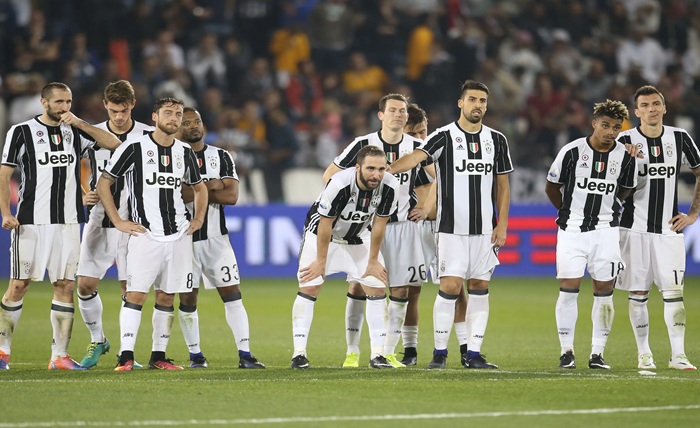
Penalty awards in a single league season rarely distribute perfectly evenly, and Serie A 2016/17 was no exception, with some clubs repeatedly getting to the spot while others found themselves conceding more often than average. For bettors, those patterns mattered because penalty frequency is tied to tactics, player profiles and defensive behaviour, all of which shape both results and markets built around goal‑scoring and discipline.
Why it made sense to study 2016/17 penalty trends
Looking at penalty trends in a specific season is reasonable because spot‑kicks are high‑value events, typically worth around 0.75–0.80 expected goals, and a small edge in frequency can significantly influence both points and goal difference. Over longer stretches of time, analyses of Serie A have shown that certain clubs, particularly attack‑minded ones, tend to accumulate more penalties than others across many seasons, hinting at structural factors rather than pure luck. Within 2016/17, understanding which teams fell into those patterns helps disentangle sustainable tendencies from short‑term randomness.
From a betting point of view, penalties matter not only for match outcomes but also for a range of markets: anytime goal‑scorers, total goals, team goals and even specific penalty‑awarded props. If some clubs consistently generated more penalty situations due to their style – frequent dribbles into the box, cut‑backs, aggressive overlaps – then a bettor who understood that link had a better basis for expecting their matches to exhibit slightly higher scoring volatility than the league baseline.
Which clubs were structurally likely to win more penalties?
Although fully broken‑out 2016/17 penalty counts require detailed season filters, longer‑range statistics across the surrounding years highlight which Serie A teams tended to sit near the top of penalty charts. Over the 10‑season span around that period, Lazio, Fiorentina, Milan, Napoli, Roma and Juventus were among the sides most frequently awarded penalties, pointing to attacking profiles that repeatedly put opponents under stress in and around the area. Those clubs generally combined sustained possession, frequent box entries and individually skilful forwards, all of which raise the chance of marginal contacts becoming fouls.
In 2016/17, the broader context fits this pattern: the top of the table was populated by offensively strong sides, and many of their penalty awards came from overloads on the flanks or late midfield runs into the box. For bettors, the key takeaway is not the exact count by club but the profile: teams playing on the front foot, with high possession in the final third and dribblers who seek contact, structurally accumulate more penalties over time than reactive, low‑block sides built around long balls and set pieces.
Which teams were more prone to conceding penalties?
On the other side of the equation, penalty concessions correlated strongly with defensive pressure, technical limitations at the back and the amount of time spent inside one’s own box. Relegation‑threatened teams and those with unstable defensive structures tended to concede more often across the surrounding years, because they relied heavily on emergency defending – last‑ditch tackles, sliding blocks and physical duels in crowded penalty‑area spaces. When defenders are repeatedly asked to intervene inside the box rather than higher up the pitch, the probability that at least some of those challenges will be late or clumsy naturally rises.
In the 2016/17 table, bottom clubs like Palermo and Pescara struggled to maintain defensive control, while Crotone and Empoli spent long spells under siege as they fought relegation. Those conditions created fertile ground for penalty concessions: high numbers of crosses to defend, repeated one‑v‑one duels against better attacking players, and moments where panicked clearances turned into handball incidents or mistimed fouls. Bettors evaluating penalty‑against risk could justifiably treat relegation candidates facing elite attackers as more likely than average to concede a spot‑kick.
Tactical and stylistic mechanisms behind more penalties
The tactical link between style and penalty frequency rests on how teams attack and defend the box. Offensively, sides that circulate the ball patiently around the penalty area and then penetrate with through balls and cut‑backs tend to create situations where defenders are forced to turn toward their own goal and defend facing their keeper, a body position that makes fouls and handballs more likely. Dribble‑heavy wingers and forwards who attack tight spaces, rather than simply firing from distance, also boost the number of contacts referees must evaluate.
Defensively, teams with high lines concede fewer box situations but risk conceding penalties on counter‑attacks if they bring down strikers running through; teams that sit in deep blocks invite more repeated box entries, making a penalty more probable simply by volume. In 2016/17, the latter pattern was common among smaller Serie A clubs trying to survive against technically superior opponents, which is consistent with broader observations that bottom‑table sides in major leagues often concede more penalties per season than their mid‑table counterparts. For bettors, paying attention to whether a team’s gameplan is to compress the box or to defend higher up can refine expectations about spot‑kick frequency beyond just “big vs small club” narratives.
Comparing high‑award vs low‑award team profiles
These underlying mechanisms create distinct team profiles in any given season. To clarify how they differ, it helps to compare typical traits of high penalty‑award sides with those of clubs that rarely get to the spot.
High‑award profiles often show:
- Heavy use of wide overloads, with full‑backs and wingers combining to attack the byline.
- Central playmakers threading passes between defenders rather than resorting to hopeful long shots.
- Forwards skilled at drawing contact, using body positioning to place themselves between ball and defender inside the box.
Low‑award profiles, by contrast, often feature:
- Direct, vertical play aimed at early crosses or long shots from outside the box.
- Fewer dribbles into the penalty area and less emphasis on combination play in tight spaces.
- Strikers geared toward aerial duels rather than ball‑carrying into congested zones.
For 2016/17 Serie A, the top teams’ attacking structures aligned more with the first set of traits, while several mid‑ and lower‑table sides leaned toward the second, which helps explain why longer‑term stats around that period show elite clubs near the top of penalty‑won rankings.
Using an online betting site mindset to translate trends into markets
Penalty trends only become practically useful when you can map them to specific betting markets rather than just treating them as trivia. Approaching this with the mindset of someone interacting with an online betting site means thinking about where penalty‑driven swings show up most clearly: anytime scorer markets for designated penalty takers, team‑total goals for sides that rely heavily on spot‑kicks, and even props on “penalty awarded – yes/no” when available. In that context, referencing ufabet168 works as a useful illustration of how a modern betting destination might present layered markets around goals and scorers, enabling a bettor who understands that certain 2016/17‑style teams were structurally more likely to be involved in penalty incidents to translate that knowledge into targeted positions on key takers, rather than simply hoping that general match‑result prices reflect the underlying probability of a spot‑kick.
Interpreting penalty data through a table‑based view
To bring these ideas into a simple structure, it helps to organise the main penalty‑related influences into a compact table. While exact 2016/17 counts require querying detailed databases, the broader patterns can still be captured through the lens of team archetypes and their likely penalty relationship.
| Team archetype (2016/17 context) | Likely penalties won trend | Likely penalties conceded trend |
| Top‑four attacking contender | Above‑average, driven by box possession | Below or around average, due to stronger defence |
| Possession‑heavy mid‑table side | Moderate to above‑average | Moderate, depending on defensive structure |
| Deep‑block relegation candidate | Below‑average (few box entries) | Above‑average, due to constant box defending |
| Transition‑focused counter‑attacking team | Variable, spikes vs open opponents | Variable, risk on fast breaks and last‑ditch fouls |
These archetypes match what the 2016/17 standings and tactical identities suggest: attacking contenders occupied the top of the table, while clubs battling relegation were often pinned back, increasing penalty‑against exposure. For bettors, the utility of this view lies in taking each upcoming fixture and asking which combination of archetypes it resembles, then anticipating whether the penalty balance is likely to tilt toward one side or remain close to neutral.
How penalty trends strengthen or weaken betting concepts
Penalty trends strengthen certain betting ideas when they line up consistently with tactical features and longer‑term data. For example, knowing that a side regularly wins penalties and has a high‑usage, reliable taker supports slightly more aggressive positions on that player’s scoring prices and on team‑goal totals, particularly against opponents whose defensive profile invites box pressure. That kind of alignment between style, data and personnel makes the concept more than just recency bias; it turns it into a repeated pattern you can test across multiple seasons.
However, the same trends can weaken or mislead if used carelessly. Penalties are still relatively rare events, and a small number of awards in 2016/17 could be driven by a cluster of marginal decisions rather than by stable structural features. Bettors who extrapolate too aggressively from a single season risk overestimating the persistence of those patterns, especially when coaches, key dribblers or main penalty takers change. The more your view depends on one or two controversial calls, the less durable it is as a predictive tool.
Where focusing on penalties alone fails
Focusing purely on penalty trends fails whenever it ignores the rest of a team’s performance profile. A side that relies heavily on penalties for its goal output becomes vulnerable if refereeing emphasis changes, if VAR interpretations tighten or if their main taker is injured; in those cases, models that bake in high penalty reliance without adjustment overstate their attacking strength. Conversely, a team that concedes a cluster of penalties early in a season may clean up its defending with coaching changes, making historic numbers a poor guide to current risk.
In the 2016/17 environment, this limitation is crucial, because penalty counts sit on top of broader dynamics like team quality, tactical flexibility and disciplinary behaviour. Treating penalties as one input among many – rather than the centrepiece of a betting strategy – helps prevent overfitting to a small number of high‑impact events that might not repeat under slightly different officiating or tactical conditions.
Summary
In Serie A 2016/17, penalty trends reflected deeper differences between attacking contenders and struggling defences, with clubs known for sustained box pressure and skilful forwards tending to win more spot‑kicks, while relegation‑threatened sides that defended deep spent more time at risk of conceding them. Those patterns have clear implications for bettors, particularly in markets linked to key takers and team‑goal outputs, but they only offer a durable edge when combined with tactical context and an understanding of how quickly personnel and coaching changes can alter a team’s penalty relationship from one season to the next.